
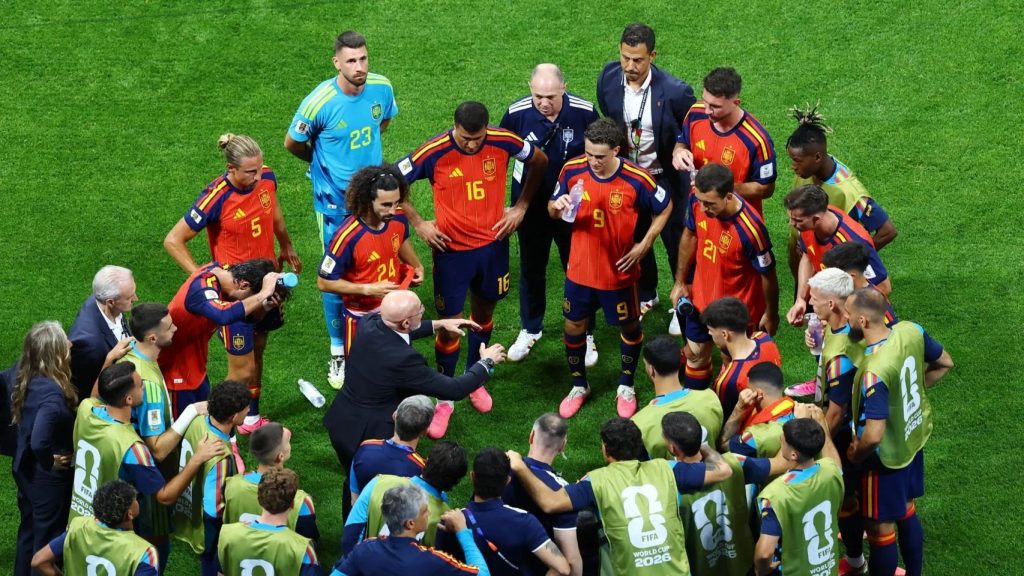
If you've been watching the 2026 FIFA World Cup, you'll have noticed something different from previous editions: every match has two hydration breaks, in the 22nd minute of each half. Three minutes of stoppage. FIFA's official explanation is player safety in extreme heat. But there's a detail worth thinking about: these breaks are also happening in covered, air-conditioned stadiums. And that takes us straight into the territory of sports marketing and event monetisation.
The advertising maths behind the breaks
Every match at the 2026 FIFA World Cup now has three moments when play stops completely:
- A hydration break in the 22nd minute of the first half
- Half-time
- A hydration break in the 22nd minute of the second half
That's three advertising windows that didn't exist before. And there's a significant detail: the referee can't restart play until the organisers give the go-ahead. In other words, the break lasts exactly as long as FIFA decides.
The economic impact in numbers
The figures speak for themselves in terms of sports event monetisation:
- More than 10 extra hours of advertising space across the tournament
- Forecast advertising revenue of around 4 billion dollars (vs. 2.9 billion at Qatar 2022)
- In countries such as France, 20 seconds of advertising during the World Cup is worth 425,000 euros
When you do the multiplication, you understand why these breaks also exist in climate-controlled stadiums.
Cynicism or business intelligence?
From my perspective as a professional in sports marketing and brand activations, I don't necessarily see this as a negative. I see it as a demonstration of how major sporting events have matured as business platforms.
The World Cup has always been the biggest advertising showcase on the planet. What FIFA is doing is optimising that space systematically, just as any company optimises its revenue streams.
The real question isn't whether it's right or wrong. The question is: how far can the commercialisation of a sporting event go before the spectacle loses its authenticity?
The future of live sports entertainment
What we're seeing with the World Cup breaks is the future of sports entertainment: events designed not only to be exciting, but to maximise advertising value in every second of the broadcast.
The sports leagues and federations around the world are watching this experiment closely. If it works for FIFA, how long before it reaches the NBA, the NFL, LaLiga or the Champions League?
When the show adapts to the business, is it still sport? Or are we watching the future of live entertainment?
I think both can coexist. But being transparent about the real motivations will always be more honest than hiding behind health arguments alone when the stadiums have air conditioning.
Gallery
Originally published on LinkedIn on 23 June 2026.