
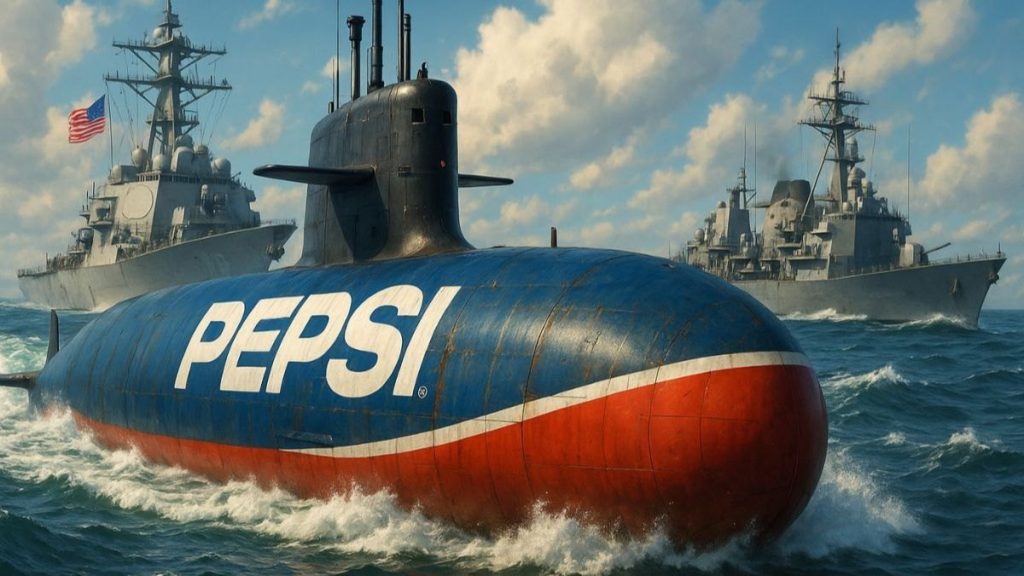
Some business stories sound made up. This one isn't. In the late 1970s, PepsiCo made a decision that briefly turned it into the world's sixth-largest naval power. The path combines strategic vision, extreme adaptability and a creativity few companies have ever matched.
The context: Coca-Cola says no, Pepsi sees an opportunity
The Soviet Union was a huge market —hundreds of millions of consumers— practically untouched by Western brands. The Coca-Cola Company chose not to enter. PepsiCo saw exactly the opposite: a massive opportunity its competitor was letting slip. The obstacle: the USSR couldn't pay in dollars. The Soviet rouble wasn't convertible into Western currencies.
The solution: a 20th-century barter
PepsiCo accepted Stolichnaya vodka as a currency. The USSR would pay for its Pepsi supply with vodka, which PepsiCo would sell on the American market. A barter carried out on an industrial scale between two superpowers. The deal worked. For years, Pepsi was the only cola available in the Soviet Union.
The problem: the vodka was no longer enough
Pepsi consumption soared to levels the original deal hadn't foreseen. The available vodka production couldn't cover everything the Soviet market was demanding. So the USSR offered to pay the shortfall with 17 submarines, several ships, frigates and decommissioned military aircraft.
PepsiCo accepted them. Briefly, the soft drinks company became the sixth-largest naval power in the world, ahead of several countries with established armed forces.
The ending: from navy to million-dollar scrap
PepsiCo sold the whole arsenal to a metal recycling company, turning Soviet submarines into a deal worth around 12 billion dollars in today's money.
The lesson: how do we make it possible?
PepsiCo was clear that it wasn't going to stop serving a consumer just because the payment method was unusual. It found an alternative. It adapted. It kept the relationship going. And it kept growing in a market its main competitor hadn't even tried to win. Sometimes the best strategic move isn't to say «it can't be done», but to ask «how do we make it possible?». And that, too, is brand building.
Originally published on LinkedIn on 13 January 2026.