
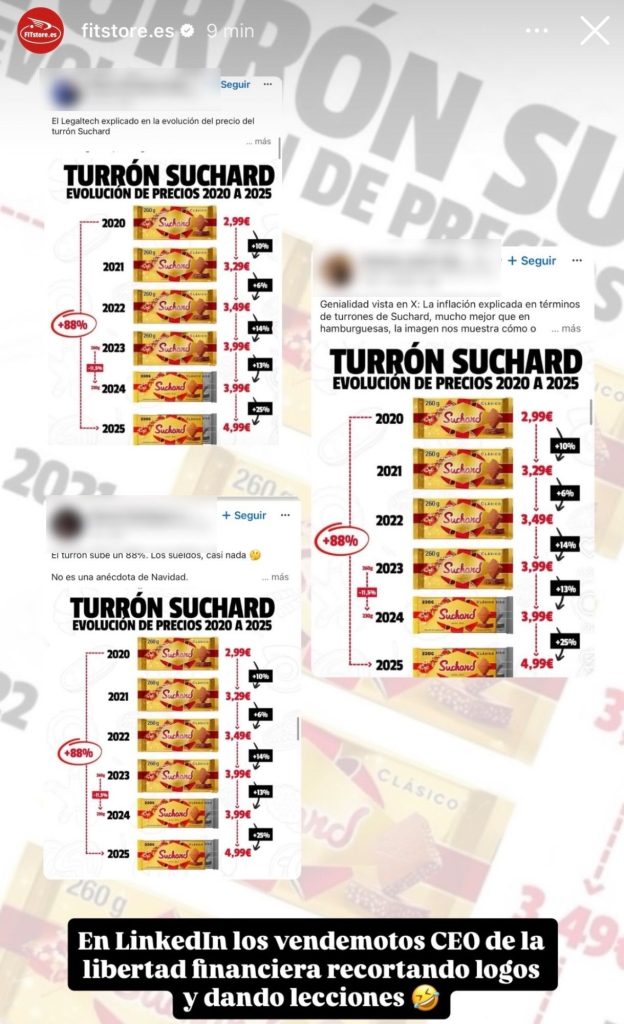
You probably saw it on your LinkedIn feed: an image showing the rise in the price of Suchard turrón over the last five years, with a smaller bar included. My initial idea was to comment on that price rise and how the share of chocolate has shrunk over the years. But what happened next struck me as far more interesting.
A viral image… without its author
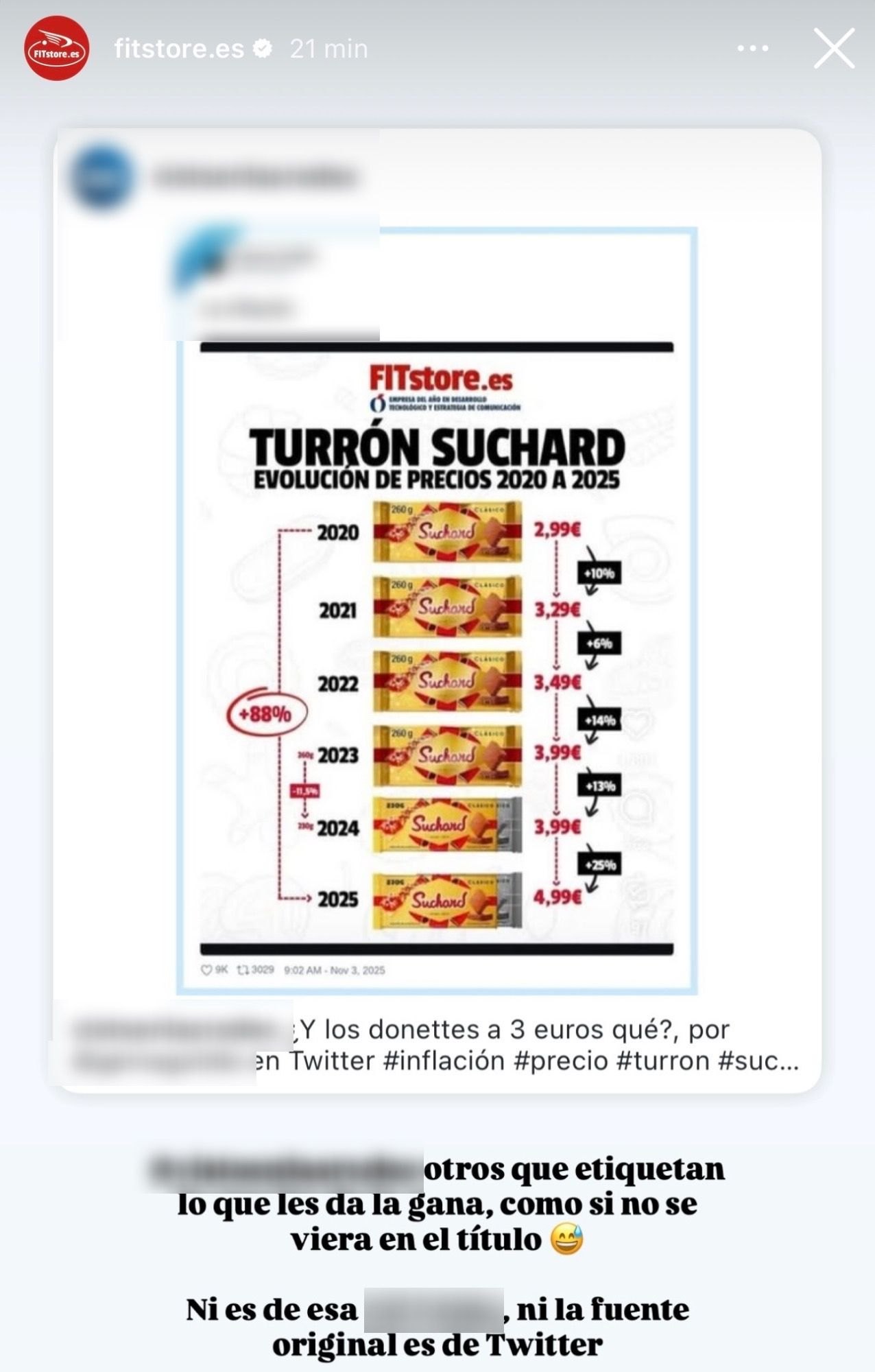
For several days, FITstore.es y FITstyle, the authors of the analysis, shared in their stories how many people were reposting their image with the logo cropped out. Media outlets, profiles and accounts of all kinds published it as if it were their own.
So I preferred to talk about something else: how we use other brands' images and other people's creations on social media.
A photo of an event is not the same as a study
There's an important nuance here. We've all used photos from the internet at some point, especially of public figures, events or ad campaigns. In those cases, simply publishing the image already credits the author or brand: the ad belongs to whoever made it.
But there is a clear difference when it comes to content, studies or research created by companies that include their logo. Cropping it out or not mentioning the author removes the sign of authorship and the credit that goes with it. It's like showing an ad with the brand taken off.
Giving credit isn't complicated
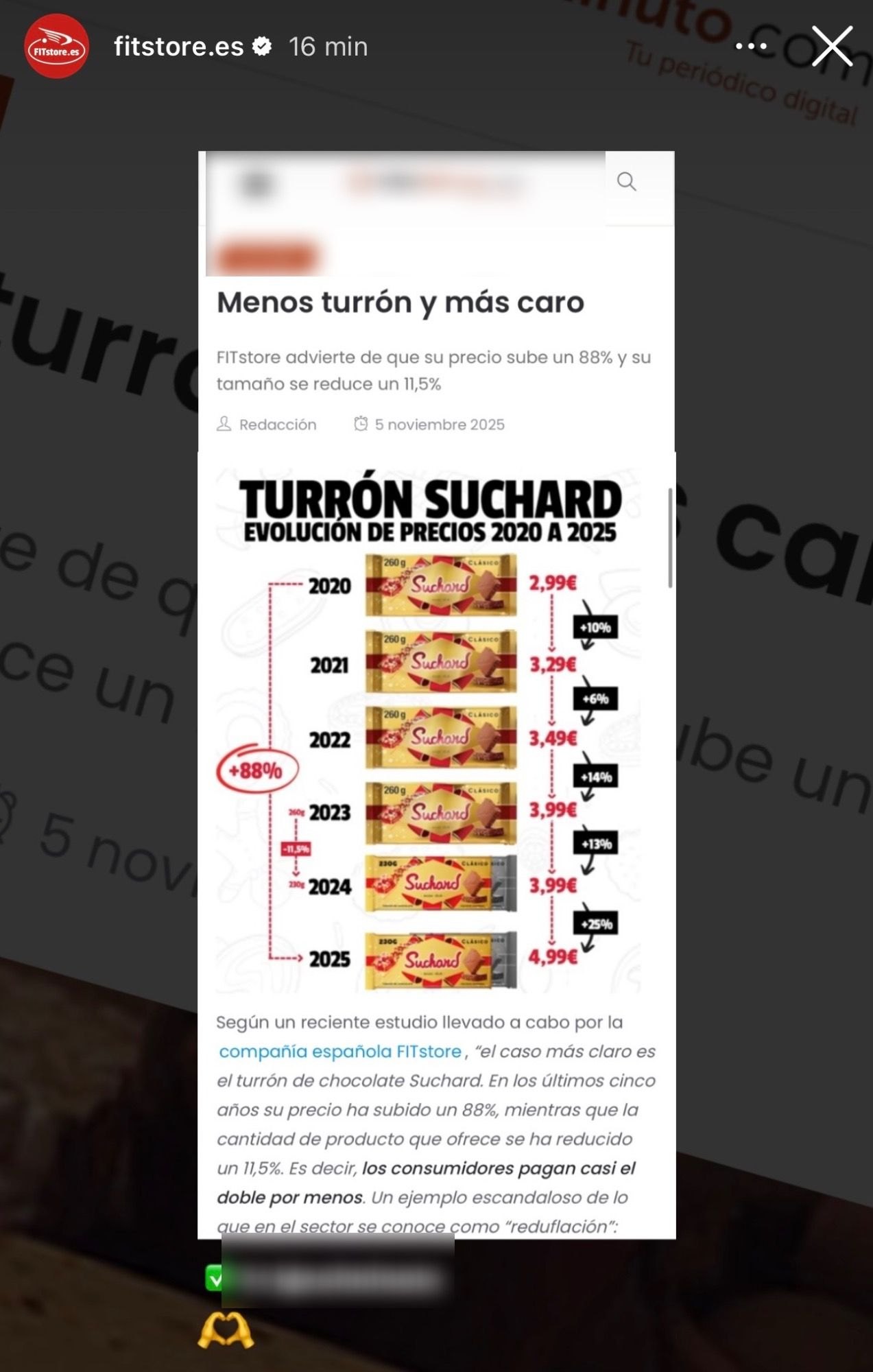
Fortunately, there were also many cases of companies, brands, people and digital media that credited the authors properly, and FITstore highlighted that in its stories too. It shows that giving credit costs nothing and makes the difference between respectful virality and appropriating other people's work.
FITstore's lesson: watermark it
FITstore learned the lesson: in its next post it added a watermark with its logo across the whole creative. It's a simple measure any brand that creates valuable content (data, infographics, studies) should bear in mind. If your content gets shared, make sure it's shared with your name on it.
Good practice with third-party content
- If you share a study or an infographic, mention and tag the author.
- Don't crop out logos or signatures.
- If the creative is yours, sign every piece visibly.
Have you ever used an image with the logo cropped out without mentioning the author? How do you handle third-party content on your social media?
Gallery






Originally published on LinkedIn on 13 November 2025.