
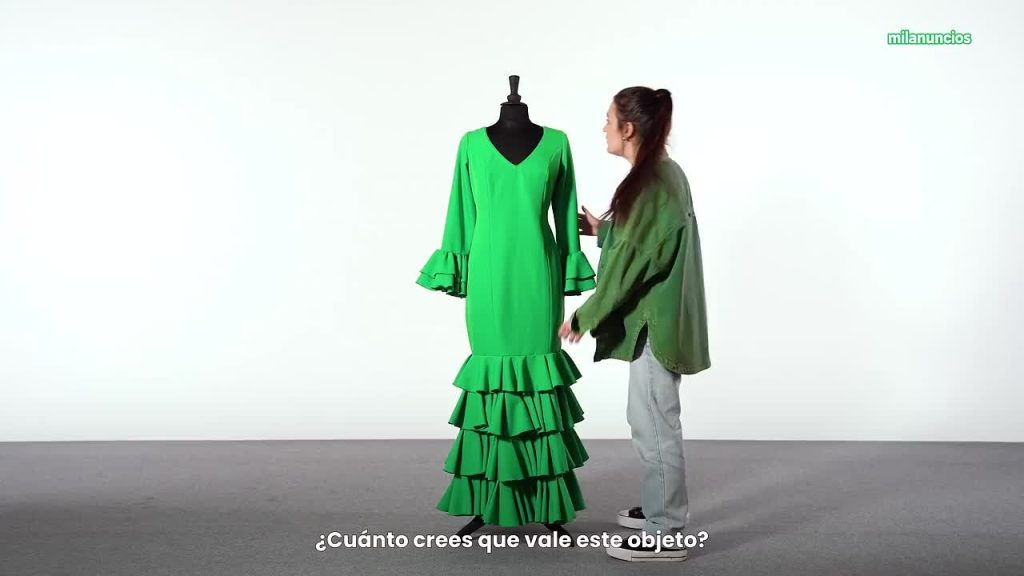
How much is an object worth? It depends on the story behind it. That's the idea Milanuncios brought to its campaign «The value of stories», a social experiment showing that we don't just buy things: we also buy the emotions and memories that come with them.
The experiment: «How much do you think this object is worth?»
The mechanic is simple. A flamenco dress and a pair of roller skates , both second-hand, and several strangers who are asked to put a price on them.
Round one: the price of fabric and wheels
In the first round, the buyers value the material object: 50-60 euros for the dress and 20-30 euros for the skates. A reasonable price for a used item.
The stories behind each object
Nuria's flamenco dress
Nuria, who has a motor disability, was given the dress by her aunt when she turned 16. «For me, the dress symbolises that limits don't exist», she explains.
Tati's roller skates
Tati is an actress. She turned up with those skates to an audition for a musical on wheels. «I didn't get the part, but I got something better»: that's where she met the love of her life.
Round two: «I think it's worth everything»
After hearing the stories, the value changes completely. The initial prices vanish and the answers are different: «I think it's worth everything», «I'll pay whatever it takes, OK?». The object is the same; what has changed is its meaning.
Why this campaign works
Storytelling
A good story can change how we perceive a product's value. It's the foundation of storytelling: data informs, but stories persuade and stick in the memory.
Price psychology
When an object has a special meaning, its perceived value soars. The campaign shows it live, with each buyer's before and after.
It fits the brand
The smartest thing is that the emotional message isn't disconnected from the business. Milanuncios lives off second-hand buying and selling, in other words, objects with a past. If it can make sellers and buyers see more value in what they exchange, it strengthens its own model. As the campaign's closing line says, every second-hand item carries a unique story.
What your brand can borrow
- Show the before and after. The contrast makes the message obvious.
- Put faces to the product. Real people generate empathy.
- Turn the «flaw» into value. Used doesn't mean worse: it has a story.
Today, the brands that communicate best aren't the ones that shout loudest, but the ones that tell the best stories. You don't sell objects: you sell what they mean. Have you ever bought (or sold) something with a special story behind it?
Originally published on LinkedIn on 11 February 2025.